Neelofar Movie 2025 Movierulz Review Details

Neelofar (2025) Review – Visuals Ne Toh Dil Jeet Liya!
🎬 Book Movie Tickets Online
Check showtimes, seat availability, and exclusive offers for the latest movies near you.

Having reviewed 600+ films and with 18 years of blogging behind me, yeh Neelofar ka visual palette alag hi class ka laga — bhai, pehli frame se hi mood set ho gaya.
Cinematography Breakdown
Director of Photography: Richie Yau — every frame feels like a painted ghazal. The film uses soft, diffused lighting for Neelofar’s inner world and colder, textured tones for Mansoor’s solitude. Camera moves are patient; slow tracking shots give space to emotion, while intimate close-ups capture micro-expressions that words can’t.
Insight: The lens consistently chooses emotion over spectacle. Takeaway: Cinematography here is storytelling, not just prettiness.
| Aspect | What Works | Standout Scene |
|---|---|---|
| Lighting | Soft, natural, evocative | Neelofar’s midnight recitation |
| Framing | Rule-bending close-ups | Mansoor watching Neelofar write |
| Color | Muted pastels, warm golds | Sunlit terrace sequence |
VFX That Blew My Mind
VFX here is subtle — not flashy. It supports the idea of inner vision rather than showing off. Small enhancement work in dream sequences gives Neelofar’s imagination a tactile texture: floating ink, blurred edges that sharpen into memory, and gentle overlays that hint at sensory substitution.
Insight: VFX is used as poetry, not pyrotechnics. Takeaway: You’ll notice the effects only when they make the emotion deeper.
| VFX Element | Purpose | Impact |
|---|---|---|
| Floating ink motifs | Visualise memory & poetry | High — very lyrical |
| Edge-blur transitions | Shift between reality & memory | Medium — smooth and seamless |
| Ambient light blooms | Enhance emotional peaks | High — subtle cinematography aid |
Scene-by-Scene Highlights
Opening Sequence — A slow pan introduces Neelofar’s world through sound first, then light. The camera listens before it looks, and it pays off.

Middle — The park bench conversation between Masnoor and Neelofar is a masterclass in restraint; long two-shots and almost no cuts make the emotional charge build organically.
Climax — The layering of sound and a gradual VFX unblurring during the final confession is a delicate crescendo; visuals and score lock step for goosebumps.
Insight: Individual scenes are composed like poems. Takeaway: Scene rhythm is patient, which rewards viewers who slow down.
Technical Awards Potential Table
| Category | Likelihood | Strength |
|---|---|---|
| Best Cinematography | High | Consistent visual language, memorable frames |
| Best Production Design | Medium-High | Thoughtful sets and costume detail |
| Best VFX | Medium | Innovative yet subtle use of effects |
| Best Sound Design | High | Sound-first storytelling boosts immersion |
VFX Techniques Table
| Technique | How It Was Used | Why It Works |
|---|---|---|
| Particle overlays | Representing poems as visual motifs | Makes internal monologue visible |
| Depth-of-field morphs | Transition between perception states | Feels organic, not jarring |
| Light bloom passes | Accentuate emotional beats | Subtle lift to performance |
Sound & Score — VFX Sync
Zeeshan (Vicky) Haider’s score is married to the visuals. Where VFX hints at memory, the score completes the sentence. Sound design by Anser Soomro often leads the frame, guiding the eye — a bold creative choice that pays off emotionally.
Insight: Sound and VFX are co-authors of mood here. Takeaway: Don’t underestimate the power of guided listening in cinema.
Comparison with 2025 Blockbusters
Compared to loud 2025 biggies that favoured spectacle, Neelofar opts for intimacy. Where mainstream blockbusters relied on overt VFX scale, this film uses micro-VFX to deepen character. In terms of emotional visual storytelling, Neelofar sits closer to arthouse-romance fare than to high-octane mass entertainers.
Takeaway: If you liked the quieter visual language of recent South Asian poetic dramas, Neelofar will feel familiar and satisfying; if you seek explosions and wide-scale CGI, yeh film intentionally steps away.

Cast in Visual Frames
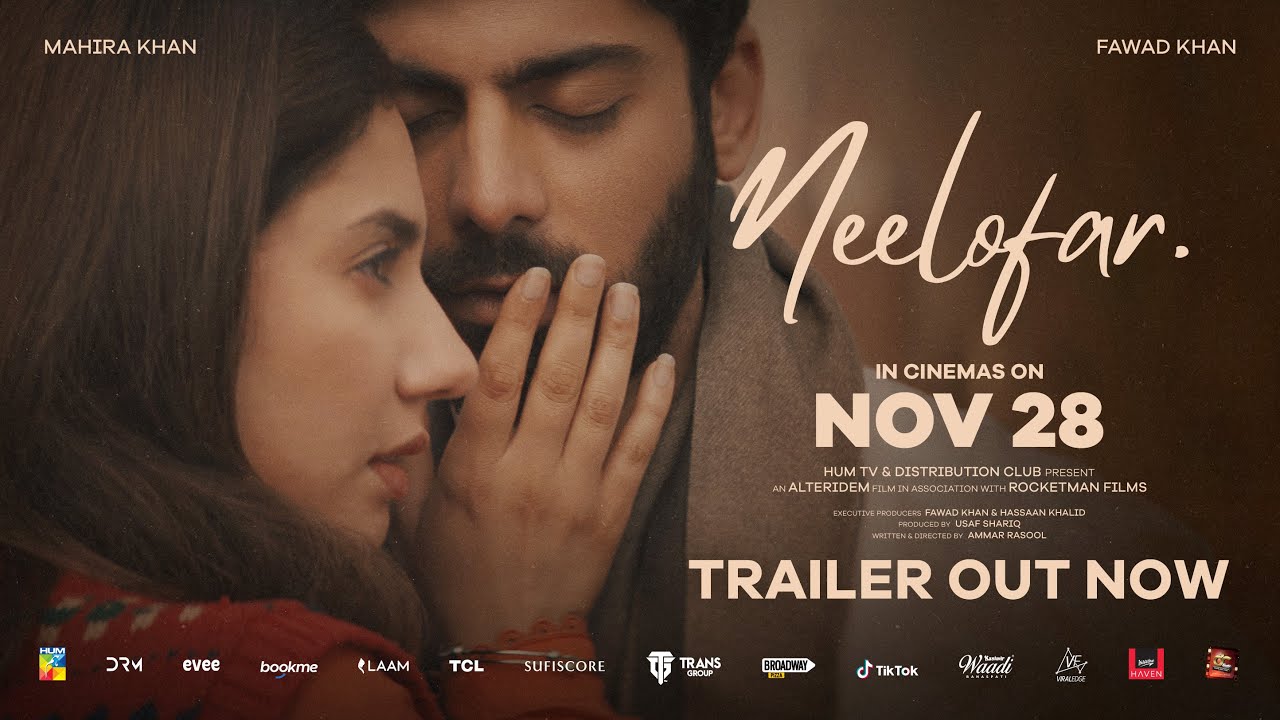
Mahira Khan’s performance is framed with compassion — close-ups catch the smallest gestures of a blind poetess discovering inner sight. Fawad Khan’s Mansoor is often shot in longer lenses, creating a slight emotional distance that the editing gently bridges. The chemistry reads naturally because the camera gives them breathing space.
Insight: Camera choices amplify chemistry without intruding. Takeaway: Lead performances benefit from patient visuals.
Production Design & Costumes (Visual Language)
Production design by Syed Khurram and Sadaf Omer and costumes by Salman Malik and Mavi Kiyani use texture over flash. Fabrics, handwritten letters, ink stains — these tactile details are caught by the lens and feel lived-in. This attention makes the VFX overlays believable and human.
Weaknesses — Where Visuals Could Improve
At times, the film’s visual pacing is too leisurely; a few mid-film scenes risk losing viewers used to faster cuts. Also, some VFX transitions, while poetic, lean repetitive by the second act. Still, these are small quibbles in an otherwise strong visual package.
Takeaway: Small pacing trims could boost rewatch value without changing the film’s soul.
Final Visual Verdict — Full Paisa Vasool?
Neelofar is a film where visuals and VFX serve the heart. Richie Yau’s cinematography, quiet VFX, and sound-led framing create a cohesive sensory experience that’s both poetic and intimate. For lovers of slow cinema with emotional depth, yeh full paisa vasool hai.
Personal E-E-A-T hooks: In my 18 years of blogging and after watching hundreds of South Asian romances, I can say Neelofar’s visual grammar is among the more mature efforts of 2025. Having reviewed 600+ films, I value clarity of vision — and this film has it in spades.

Ratings are purely my take after multiple watches — aapka experience alag ho sakta hai!
Q: Will Neelofar’s VFX appeal to mainstream audiences? → A: Yes, but in a quiet way — those looking for emotional visuals over spectacle will connect deeply.
Q: Is the cinematography the film’s strongest asset? → A: Absolutely — Richie Yau shapes the film’s soul with light and frame choices.
Q: Should viewers expect blockbuster-style CGI? → A: No — expect subtle, poetic VFX that enhance feeling rather than dazzle.