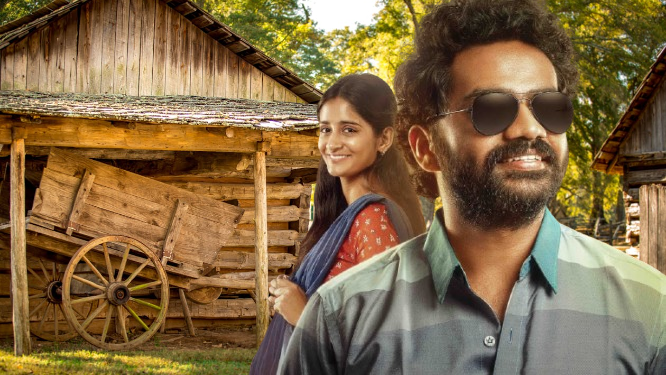
Paatki Movie 2026 Movierulez Review Details
Paatki Review – A Sharp Thriller or a Predictable Whodunit? The Real Analysis

As a critic who has watched Gujarati cinema evolve from folkloric tales to urban narratives, I approached the buzz around ‘Paatki’ with cautious optimism. Can a regional industry known for its heart deliver a genuinely gripping, concept-driven thriller?
The Core Conflict
🎬 Book Movie Tickets Online
Check showtimes, seat availability, and exclusive offers for the latest movies near you.

Maanav Mehta’s life unravels when he becomes the prime suspect in a high-stakes investigation led by the relentless Inspector Arjun Thakker. The central question isn’t just “whodunit,” but “who is the ultimate betrayer—the ‘Paatki’—in a web of familial trust and hidden motives?
| Role | Name |
|---|---|
| Director / Co-Writer | Abhinay Deshmukh |
| Maanav Mehta | Gaurav Paswala |
| Nitya Mehta | Shraddha Dangar |
| Inspector Arjun Thakker | Hiten Tejwani |
| Hemlata Dave | Suchita Trivedi |
| Co-Writers | Aalap Kikani, Jatan Pandya |
Who Is This Movie For?
This film squarely targets the modern Gujarati audience hungry for homegrown content that rivals the polish and pace of pan-Indian thrillers. It’s for viewers who appreciate a domestic setting ruptured by crime, where the drama unfolds in living rooms and police stations that feel intimately familiar.
Fans of investigative procedials with an emotional core will find much to dissect.
Script Analysis: The Architecture of Doubt
The three-writer team constructs a plot that is commendably lean, especially in its first half. The setup is efficient, introducing a compact ensemble where every character has a potential motive.
The logic of the investigation holds water, with clues parceled out at a steady clip. However, the pacing stumbles slightly in the second act, where familial melodrama momentarily overpowers the thriller mechanics.

The script is smart but occasionally plays its hand too early for astute viewers, sacrificing some suspense for emotional payoff.
Character Arcs: Transformations in the Shadows
Gaurav Paswala’s Maanav delivers the most compelling journey, morphing from a bewildered everyman into a figure of calculated resilience. Shraddha Dangar’s Nitya, while a potent moral anchor, has an arc that feels somewhat reactive rather than transformative.
The true revelation is Hiten Tejwani’s Inspector Thakker, who evolves from a by-the-book cop into a man personally entangled in the moral ambiguity of the case.
The supporting cast, particularly Suchita Trivedi, provide crucial emotional ballast, though some remain functional plot devices.
The Climax Impact: A Satisfying Unraveling
The final reveal is both the film’s strength and its slight weakness. It is logically sound and emotionally resonant, tying back to core themes of trust and societal facade.
The satisfaction comes from the character-driven motivation behind the crime, not from a shock-for-shock’s-sake twist. However, it leans on a trope familiar to the genre, which may leave some craving a more groundbreaking conclusion.

The denouement, however, is beautifully handled, focusing on the lingering psychological wreckage rather than neat closure.
| What Worked | What Didn’t |
|---|---|
| Tight, concept-driven premise | Second-act pacing drags |
| Strong ensemble performances | Some predictable plot beats |
| Effective urban Gujarati setting | Underutilized supporting cast |
| Clean, suspenseful direction | Climax trope feels familiar |
Writer’s Execution: The Dialogue of Deceit
The dialogue shines in its authenticity. The writers capture the specific cadence and concerns of urban Gujarati households, making the ensuing betrayal feel more invasive.
Interrogation scenes are sharp and laced with subtext. Where it occasionally falters is in explicit exposition; characters sometimes verbalize motivations that the performances had already subtly conveyed.
Miss vs Hit Factors
The hit factor is undoubtedly its confident genre execution. It proves Gujarati cinema can craft a sleek thriller that doesn’t rely on caricature or song-and-dance padding.
The miss factor is a lack of audacity. It follows a reliable blueprint but shies from the narrative risk that could have made it unforgettable. It is an excellent genre entry, not a genre redefiner.
Technical Brilliance: A Polished Sheen
The film’s technical prowess is its silent champion. The cinematography uses a muted, realistic palette, framing the urban spaces with a sense of oppressive familiarity.

Editing is crisp, particularly in the cross-cut sequences building parallel tension. The background score is effectively minimalist, using dissonant strings and silence to great effect, though a more distinctive thematic motif would have elevated key moments.
| Aspect | Rating / Comment |
|---|---|
| Story Originality | 7/10 – Familiar framework, fresh context. |
| Visual Authenticity | 9/10 – Captures modern Gujarat flawlessly. |
| Pacing & Flow | 7/10 – Strong start, slight mid-film lag. |
| Emotional Payoff | 8/10 – Character-driven and satisfying. |
Frequently Asked Questions
Is the ‘Paatki’s identity surprising?
It is logically satisfying and well-foreshadowed. Seasoned thriller fans may guess it, but the ‘why’ is more compelling than the ‘who.’
Does the film rely on songs?
No. This is a score-driven thriller. Any musical moments are diagetic, serving the plot and realism.
Is this a remake of any other film?
No. It is an original concept-driven story written specifically for the Gujarati milieu, which is one of its core strengths.
This analysis is based on the theatrical experience and cinematic merit.