Bicharo Bachelor Movie 2026 Movierulez Review Details
Bicharo Bachelor Review – A Relatable Farce or a Forced Comedy? The Real Analysis

As a critic who champions regional cinema, I walked in hoping for a sharp, culturally-rooted satire on modern matrimonial pressure. I left wondering if the film itself was a desperate proposal, trying too hard to be liked.
The Core Conflict
🎬 Book Movie Tickets Online
Check showtimes, seat availability, and exclusive offers for the latest movies near you.

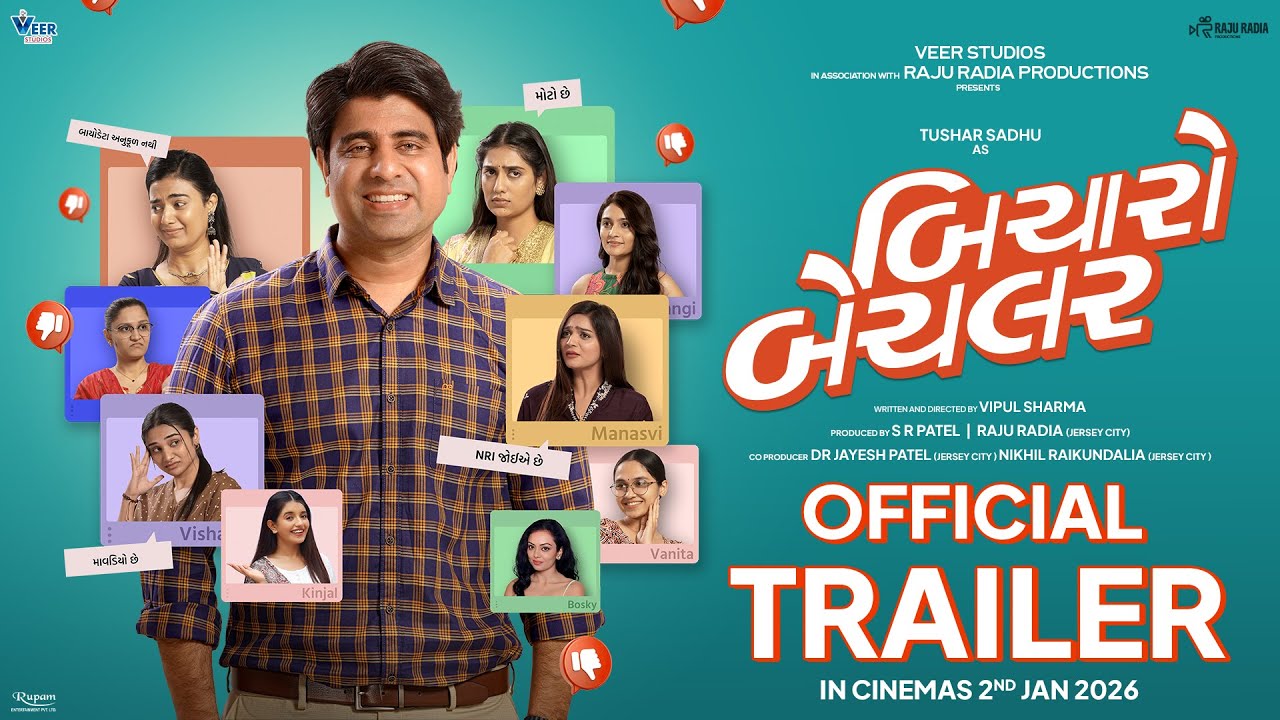
Anuj, a 28-year-old man, is declared a ‘bicharo’ (poor) bachelor by his family, who believe his time is running out. This sparks a frantic, comedy-of-errors quest to find a bride, navigating a gauntlet of potential matches, overbearing relatives, and his own evolving understanding of what he truly wants from life and love.
| Role | Name |
|---|---|
| Director & Writer | Vipul Sharma |
| Anuj | Tushar Sadhu |
| Manasvi | Twinkal Patel |
| Shobha | Jaimini Trivedi |
| Sanjay | Prashant Barot |
| Dada | Navin Rawal |
| Music Director | Rahul Prajapati |
Who Is This Movie For?
This film squarely targets the core Gujarati family audience seeking undemanding, festive entertainment. It’s for viewers who find immediate comfort in recognizable tropes: the nagging parents, the scheming relatives, the chaotic wedding meetings.
If you’re looking for a film to watch with the family during a holiday, where laughter is expected and narrative innovation is not, this fits the bill. Cinephiles seeking nuanced storytelling or fresh takes on the genre will find it frustratingly familiar.
Script Analysis: The Flow and The Flaws
The screenplay operates like a checklist of sitcom scenarios. We move mechanically from one prospective bride meeting to the next, each designed to deliver a specific type of gag. The initial momentum of Anuj’s panic is engaging, but the structure quickly reveals its repetitive skeleton.
Pacing is the script’s Achilles’ heel. At 128 minutes, the film feels notably stretched. The middle act sags under the weight of its own formula, with subplots—like the antics of Pappu and Fuva—feeling more like filler than organic comedy.
The logic often takes a backseat to the next punchline, making the world feel artificially constructed for jokes rather than a lived-in space.

Character Arcs: Does Anuj Truly Grow?
Anuj’s journey is less a profound arc and more a gradual acceptance of circumstance. Tushar Sadhu plays him with a likable, everyman charm, effectively conveying the frustration and absurdity of his situation.
However, the script doesn’t deeply interrogate his initial reluctance or his final choice.
His growth from a pressured bachelor to a committed partner is presented, but it feels more like a narrative inevitability than a hard-won emotional realization.
The supporting characters are broadly drawn types—the stern father figure, the melodramatic mother, the quirky potential brides. They serve the comedy, but rarely transcend their archetypes to become memorable individuals.
The Climax Impact: A Satisfying Resolution?
The climax leans heavily into sentimental family bonding, aiming for a heartwarming, feel-good resolution. It successfully delivers on the film’s core promise: that family, despite its chaos, means well.
However, the emotional payoff feels somewhat unearned. After a parade of broadly comic mishaps, the sudden shift to sincere emotion can feel tonally jarring. It provides closure, but of a predictable kind. You leave with a smile, but not necessarily a lasting impression.
| What Worked | What Didn’t |
|---|---|
| Relatable core premise of matrimonial pressure. | Repetitive, checklist-like screenplay structure. |
| Tushar Sadhu’s earnest and likable lead performance. | Over-reliance on tired physical comedy tropes (e.g., repeated assaults on Dada). |
| Catchy, well-picturized musical numbers. | Weak character development for supporting cast. |
| Genuine ensemble chemistry in family scenes. | Pacing issues, especially in a bloated second act. |
Writer’s Execution: The Dialogue Dilemma
Vipul Sharma’s dialogue oscillates between genuine, culture-specific humor and forced, on-the-nose jokes. The banter within the family unit often rings true, capturing the unique rhythm of Gujarati household arguments and endearments.

Yet, too many lines feel engineered solely for a laugh track, lacking subtlety. The comic sequences with side characters frequently descend into exaggerated delivery, making the humor feel manufactured rather than organic.
The potential for sharper social commentary within the setup is largely untapped.
Miss vs Hit Factors: Why It Stumbles
The hit factor is undoubtedly its authenticity of setting and premise. It understands the cultural engine that drives matrimonial anxiety and mines it for recognizable humor. Tushar Sadhu is a capable anchor, and the songs are genuine assets.
The miss factor is a lack of directorial polish and script discipline. The film feels content with being a compilation of gags rather than a cohesive narrative.
The technical execution, while competent, lacks a distinctive visual or editorial flair that could elevate the material. It mistakes activity for comedy and repetition for structure.
Technical Brilliance: A Mixed Bag
Rahul Prajapati’s music is the film’s standout technical achievement. Tracks like “Slow Motion” are infectiously upbeat, and the background score, while occasionally overbearing, has a professional sheen. Cinematographer Roopang Acharya captures the vibrancy of the settings in clean, bright frames.
However, the editing fails to tighten the flabby runtime, and the sound design sometimes leans into cacophony to sell the chaos. The VFX and animations used for comic effect are serviceable but highlight the film’s sitcom-like aesthetic rather than a cinematic one.

| Aspect | Rating / Comment |
|---|---|
| Story Originality | 5/10 – A well-worn premise executed conventionally. |
| Visual Appeal | 6/10 – Bright and clean, but lacks a directorial signature. |
| Music & Songs | 8/10 – The film’s strongest suit, with high replay value. |
| Pacing & Editing | 4/10 – The primary culprit behind the viewing fatigue. |
| Overall Execution | 5/10 – Delivers on base expectations but misses the chance to excel. |
Frequently Asked Questions (FAQs)
Does Anuj end up with Manasvi or someone else?
The film culminates in Anuj making a choice, but to reveal it would spoil the final act’s central decision. His journey involves multiple prospects, including Manasvi and Kinjal.
Is the character of Dada okay after all the physical comedy?
Yes. The repeated assaults on Dada (Navin Rawal) are played purely for slapstick effect.
The character recovers from each incident as part of the film’s exaggerated comic logic, leading to a sentimental subplot regarding his health.
Why does the film have such a high IMDb rating alongside critical pans?
The early high IMDb score (e.g., 9/10) is common for regional films upon release, often driven by initial fan enthusiasm and cast/crew networks.
It typically stabilizes over time. Professional critics review based on cinematic craft and narrative cohesion, which is where the film’s weaknesses are most apparent.
This analysis is based on the theatrical experience and cinematic merit.