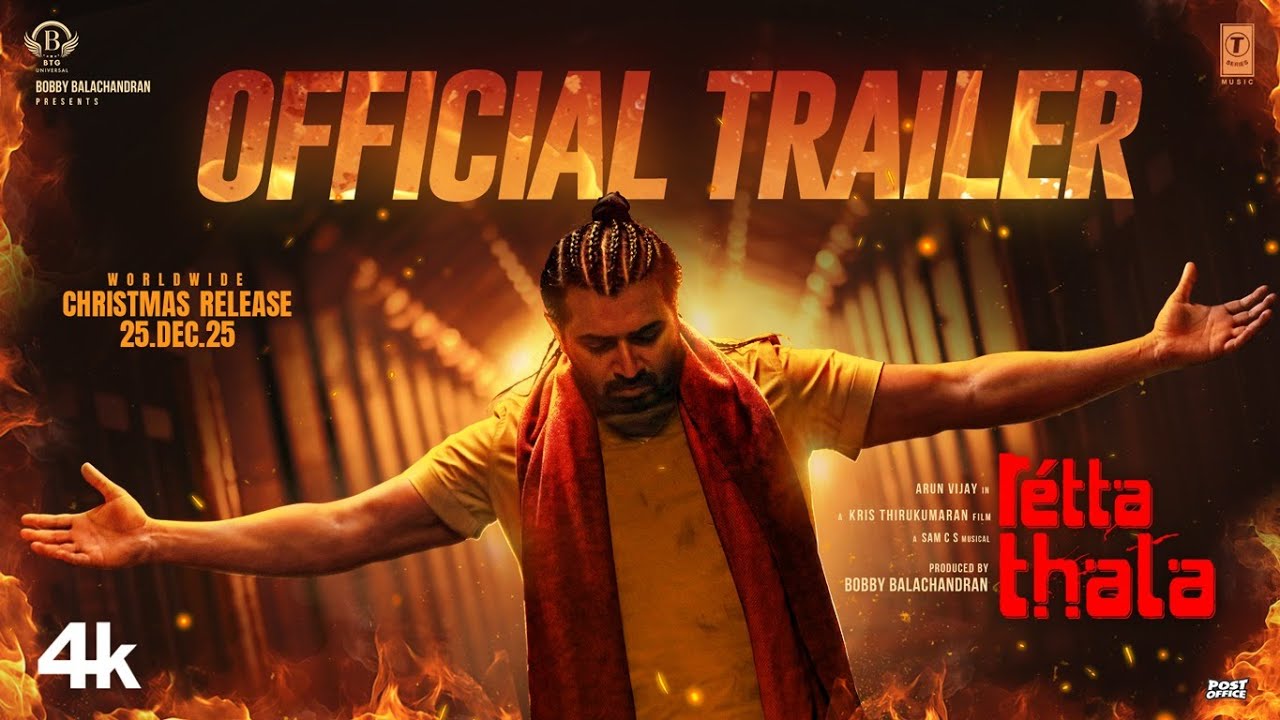
Retta Thala Movie 2025 Movierulez Review Details
Retta Thala Review – A Gritty Identity Crisis or Just Another Dual-Role Gimmick? The Real Analysis

Having witnessed countless actioners try and fail to balance spectacle with substance, I walked into *Retta Thala* with a critic’s skepticism. Can a film built on the well-worn trope of dual roles deliver anything beyond a star vehicle’s vanity?
🎬 Book Movie Tickets Online
Check showtimes, seat availability, and exclusive offers for the latest movies near you.

The answer is a surprisingly visceral, if not entirely revolutionary, yes.
The Core Conflict
This is a tale of two men, both played by Arun Vijay, locked in a brutal dance of destiny. On one side is Malpe Upendra, a ruthless power broker operating in the shadows.
On the other is Shivam, a man driven by a more personal, perhaps purer, code. Their collision is less about good versus evil and more about two opposing forces of nature, exploring how purpose is forged in the fires of conflict and betrayal.
| Role | Name |
|---|---|
| Malpe Upendra / Shivam | Arun Vijay |
| Female Lead | Siddhi Idnani |
| Female Lead | Tanya Ravichandran |
| Antagonist | Yogi Samy |
| Director / Writer | Kris Thirukumaran |
| Music Director | Sam C.S. |
| Cinematographer | Tijo Tomy |
Who Is This Movie For?
This film is squarely aimed at the core Tamil action cinema audience that craves muscular, no-nonsense storytelling. Fans of Arun Vijay will find him in top form, delivering a physically committed dual performance.
If you prioritize gritty atmosphere, relentless pacing, and expertly choreographed stunts over nuanced character study, this is your holiday feast. Viewers seeking profound thematic depth or narrative innovation might find the plate a bit familiar.
Script Analysis: The Engine of Mayhem
Kris Thirukumaran’s script is a lean, mean machine. It understands its primary function: to be a conduit for high-octane drama. The plot mechanics of shifting identities and revealed pasts are efficiently deployed, serving the action rather than bogging it down in convoluted exposition.
The pacing is the script’s greatest asset—it moves with a propulsive energy from the first frame, barely pausing for breath. This breathlessness is both a strength and a weakness.

While it ensures zero boredom, it occasionally glosses over logical connective tissue, asking the audience to simply ride the wave of momentum. The structure is classic mass masala, but executed with a sharp awareness of modern, shorter attention spans.
Character Arcs: Shadows and Substance
Arun Vijay’s dual roles are the film’s central thesis. The arc here is less about individual transformation and more about the revelation of a fractured whole.
Malpe Upendra and Shivam represent two sides of a corrupted coin. The film’s intrigue lies in unpacking which side bears the real value. Arun Vijay differentiates them more through demeanor and intent than drastic physical changes, which is a smart choice—it grounds the conflict in psychology.
Siddhi Idnani provides the necessary emotional anchor, her character serving as the moral compass amidst the chaos. The true wildcard is Yogi Samy’s antagonist, a seething presence whose menace adds a crucial third point to the dramatic triangle, preventing it from becoming a simple binary clash.
The Climax Impact: A Symphony of Fists and Fate
The final act delivers precisely what the film promises: a cathartic, visceral confrontation. It wisely focuses on the physical and ideological clash between the two Vijays, resolving the central mystery of their connection with a twist that, while not earth-shattering, feels emotionally earned.
The satisfaction derives from the sheer execution—the choreography, the sound design, the raw intensity of the performances. It’s a climax that prioritizes visceral payoff over philosophical ambiguity, a choice that will leave the target audience roaring rather than ruminating.
| What Worked | What Didn’t |
|---|---|
| Propulsive, airtight pacing that never sags. | Secondary characters feel functional, not fully fleshed out. |
| The clever use of dual roles to explore internal conflict externally. | Narrative beats can feel predictable within the genre framework. |
| Efficient world-building that establishes stakes quickly. | The breakneck speed sometimes sacrifices deeper emotional resonance. |
Writer’s Execution: Dialogue as Weaponry
The dialogue in *Retta Thala* is utilitarian and sharp, like a well-honed blade. It’s not designed for poetic flourish but for impact. One-liners land with punch, and confrontational exchanges crackle with tension.
The writing shines in its economy; characters declare their intentions and philosophies without unnecessary monologues. This aligns perfectly with the film’s gritty tone.

However, this sparseness means moments that could have used more lyrical or nuanced conversation—particularly in the romantic subplot—feel slightly truncated, serving the plot more than enriching the characters.
Miss vs Hit Factors: The Tightrope Walk
The film’s greatest hit is its unwavering commitment to its own tone and pace. Director Kris Thirukumaran knows the genre and delivers a polished, professional product that doesn’t overreach.
The technical package—from stunts to sound—is top-tier for its scale. Arun Vijay’s committed performance sells the central conceit. The miss factor lies in its conscious choice to be a great genre film rather than an innovative one.
It plays safely within established boundaries. The emotional beats, while effective, are familiar. The social or moral commentary is present but not deeply interrogated.
It is a hit of execution, not of conception.
Technical Brilliance: The Sensory Assault
This is where *Retta Thala* truly ascends. Tijo Tomy’s cinematography is dynamic and gritty, using a palette of concrete grays and neon spills to create a compelling urban jungle.
The action sequences, orchestrated by P.C. Stunts, are brutal, coherent, and thrillingly shot. Sam C.S.’s background score is a character in itself—a pulsating, aggressive soundscape that elevates every scene.
The sound design by Renjith Venugopal and M. Saravanakumar is meticulously brutal; every punch, crash, and gunshot feels tactile and impactful. The editing by Anthony is razor-sharp, maintaining the film’s frantic rhythm without descending into chaos.

| Aspect | Rating / Comment |
|---|---|
| Story Originality | 7/10 – Familiar framework, executed with precision. |
| Visual Impact | 9/10 – Top-notch cinematography and visceral action choreography. |
| Pacing & Engagement | 9/10 – Relentless and expertly controlled. |
| Character Depth | 6/10 – Functional for leads, minimal for supporting cast. |
| Overall Technical Craft | 9/10 – A masterclass in mass action filmmaking technique. |
Frequently Asked Questions (FAQs)
Q: What is the central relationship between Arun Vijay’s two characters?
A: Without major spoilers, they are two sides of the same tragic coin, bound by a shared past that is violently fractured, forcing them onto opposing paths.
Q: Is the film overly violent?
A> It carries a UA 16+ rating for a reason. The action is intense, gritty, and frequent, though not gratuitously gory. It’s stylized violence in service of the thriller narrative.
Q: Does the dual role feel like a gimmick, or is it integral to the plot?
A> It is firmly integral. The entire narrative engine and thematic exploration of identity, power, and purpose are built upon the dynamic between the two characters.
This analysis is based on the theatrical experience and cinematic merit.