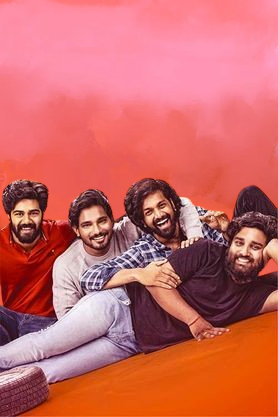
Sahakutumbaanaam Movie 2025 Movierulez Review Details
Sahakutumbaanaam Review – A Heartwarming Mess or Just Another Family Chaos? The Real Analysis

As a critic who has weathered countless ‘family entertainers,’ I walked in braced for formulaic pandering. What I found was a surprisingly sincere, if occasionally uneven, ode to the beautiful dysfunction of chosen kinship.
The Core Conflict
🎬 Book Movie Tickets Online
Check showtimes, seat availability, and exclusive offers for the latest movies near you.

Kalyan, a software engineer celebrated as the perfect family man, has built his life on a foundation of lies. When Siri, a sharp-witted orphan pretending to have a career, enters his home, she becomes an accidental archaeologist, unearthing the truth: this loving, chaotic family is not biologically his.
The film becomes a domino effect of revelations, asking what truly defines a family when bloodlines are irrelevant.
| Role | Name |
|---|---|
| Kalyan | Raam Kiran |
| Siri | Megha Akash |
| Comedy Patriarch | Brahmanandam |
| Emotional Anchor | Rajendra Prasad |
| Director/Writer | Uday Sharma |
| Music Director | Mani Sharma |
| Cinematographer | Madhu Dasari |
Who Is This Movie For?
This is a film for the urban viewer nostalgic for the warmth of a joint family they may not have. It’s for audiences seeking laughter that doesn’t come at the expense of heart, and for those who appreciate veteran comedians given room to breathe.
If you crave high-octane action or groundbreaking plot twists, look elsewhere. This is comfort cinema, best enjoyed with a multigenerational crowd.
Script Analysis: The Tightrope of Tone
Uday Sharma’s screenplay walks a precarious line between slapstick chaos and genuine emotion. The first half leans heavily into situational comedy—misunderstandings pile up, doors slam, and voices rise in a symphony of domestic frenzy.
The pacing here can feel episodic. However, the script’s cleverness lies in how each comedic set-up is subtly laying groundwork for emotional payoff. A throwaway joke about a character’s quirk becomes a key to their hidden past.

The second half benefits from this foundation, allowing the drama to feel earned rather than melodramatic. The logic of the central secret holds up, anchored by Kalyan’s relatable motive: a profound, desperate loneliness.
Character Arcs: From Caricatures to Kin
The film’s greatest success is transforming its broad comic ensemble into a believable family unit. Raam Kiran’s Kalyan effectively portrays the anxiety of a man living a double life, his calm facade cracking at the edges.
Megha Akash’s Siri is the audience’s proxy—initially cynical, then increasingly invested in preserving the very fiction she exposed. The veterans, Brahmanandam and Rajendra Prasad, are not mere joke dispensers.
Their characters possess hidden depths and regrets that surface in the latter acts, providing the film’s most poignant moments. The arc is collective: a group of individuals pretending to be a family slowly realize they have, in fact, become one.
The Climax Impact: Satisfying the Emotional Debt
The climax avoids a simplistic, tearful reconciliation. Instead, it plays out as a series of quiet, personal revelations that collectively dismantle the central lie.
The satisfaction derives not from a shocking twist, but from watching characters choose each other with full knowledge of their flaws and pasts. It’s a climax of acceptance, not absolution.
While some may find it predictable, its emotional authenticity makes it resonate. It pays off the film’s core thesis: family is not an inheritance, but a daily act of construction.

| What Worked | What Didn’t |
|---|---|
| Ensemble comic timing, especially from the veterans. | A slightly meandering first-half pace. |
| The seamless blend of humor and heartfelt drama. | Some supporting characters remain underdeveloped. |
| The core concept of a “found family” is executed with sincerity. | The plot framework is familiar to the genre. |
| Strong emotional payoff in the final act. | Relies on audience buy-in to the chaotic tone. |
Writer’s Execution: Dialogue as a Double-Edged Sword
The dialogue shines in two areas: the rapid-fire, overlapping exchanges during comedic family fights, which feel authentically chaotic, and the quieter, vulnerable confessions later on.
Uday Sharma understands the rhythm of Telugu household banter. However, some of the expository dialogue used to unveil backstories can feel functional rather than organic.
The film is at its best when it shows, not tells—like a character’s silent reaction revealing more than a monologue ever could.
Miss vs Hit Factors: The Delicate Balance
The hit factor is unequivocally the film’s heart. Its commitment to its emotional core prevents it from becoming a mere comedy skit. The casting of beloved veterans alongside fresh faces creates a dynamic that feels both nostalgic and new.
The miss factor is its structural safety. It follows the well-trodden path of the genre—comedy first, drama second, reconciliation third.
It doesn’t seek to reinvent the wheel, which will be a strength for its target audience but a limitation for those seeking narrative innovation. The success hinges entirely on execution, which, thankfully, is largely adept.
Technical Brilliance: Crafting a Lived-In World
Madhu Dasari’s cinematography doesn’t scream for attention but effectively creates a vibrant, lived-in space. The house feels like a real home, crowded with memory and clutter.

Mani Sharma’s music is a highlight—the score swells with genuine sentimentality without becoming cloying, and the songs are well-integrated bursts of energy.
Editing by Sashank Mali and Shiva Sharvani is sharp in comedic moments, allowing reactions to land, and more measured during dramatic beats. The sound design deserves note for its immersive quality; you feel the cacophony of the household.
| Aspect | Rating / Comment |
|---|---|
| Story Originality | 7/10 – Familiar framework, fresh execution. |
| Visual Warmth | 8/10 – Cinematography creates a cozy, authentic atmosphere. |
| Emotional Payoff | 8.5/10 – The film’s strongest suit, genuinely affecting. |
| Pacing & Rhythm | 7/10> – Sags slightly in the first act, then finds its flow. |
| Overall Execution | 7.5/10 – A well-made, satisfying genre piece. |
Frequently Asked Questions (FAQs)
Q: Is the movie suitable for kids?
A: Absolutely. It’s a clean, family-friendly film with humor that works across ages and no objectionable content.
Q: Do Brahmanandam and Rajendra Prasad have significant roles?
A> Yes. They are integral to the plot, not just cameos. Their roles provide both the primary comic relief and substantial emotional weight.
Q: Is this a remake of any other film?
A> No, it is an original story, though it operates within the beloved “dysfunctional family comedy-drama” genre common in Indian cinema.
This analysis is based on the theatrical experience and cinematic merit.