The Odyssey Movie 2025 Movierulez Review Details
The Odyssey Review – A Masterful Epic or a Cold Spectacle? The Nolan Conundrum

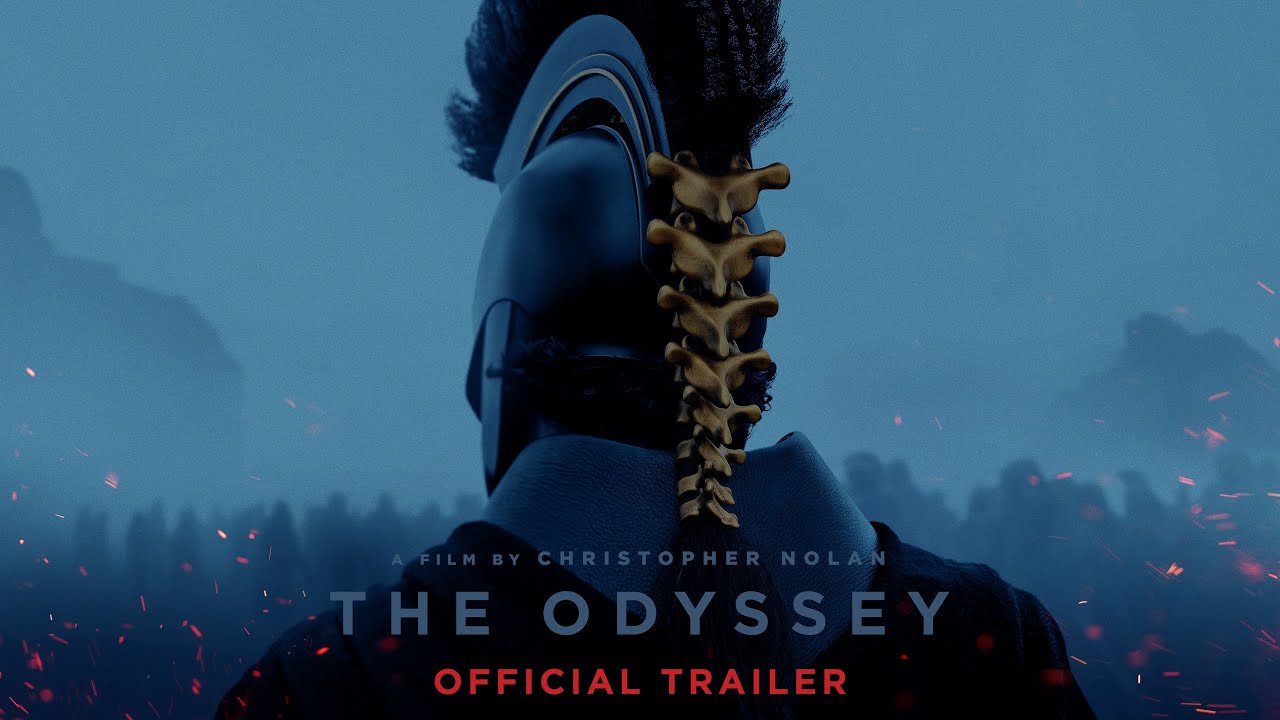
Having just witnessed the IMAX 70mm print, I’m left with a singular, overwhelming sensation: Christopher Nolan hasn’t just adapted Homer; he’s built a cathedral to human endurance, stone by practical stone, and dared us to find the soul inside its awe-inspiring walls.
The Long Road Home
🎬 Book Movie Tickets Online
Check showtimes, seat availability, and exclusive offers for the latest movies near you.

Following the Trojan War, the cunning King Odysseus (Matt Damon) begins a decade-long voyage back to Ithaca. His journey is a gauntlet of mythical horrors—a vengeful Cyclops, seductive sorceresses, and sea monsters—all while his wife Penelope (Anne Hathaway) and son Telemachus (Tom Holland) fight a different war of attrition against usurpers in their home.
Nolan fractures this timeline, weaving past, present, and future into a tapestry of memory, prophecy, and sheer survival.
| Role | Name |
|---|---|
| Odysseus | Matt Damon |
| Penelope | Anne Hathaway |
| Telemachus | Tom Holland |
| Director/Writer | Christopher Nolan |
| Cinematographer | Hoyte van Hoytema |
| Composer | Ludwig Göransson |
Who Is This Movie For?
This is for the Nolan faithful and epic cinema purists. It rewards those who crave monumental scale achieved through tangible, audacious filmmaking. If you value psychological subtext over emotional warmth, and consider a film’s construction as part of its narrative, you are the target.
Casual viewers seeking a straightforward hero’s journey may drown in its dense, non-linear currents.
Script Analysis: The Architecture of Myth
Nolan’s script is a feat of engineering. The non-linear structure isn’t a gimmick; it’s the thesis. By intercutting Odysseus’s trials with Penelope’s silent war and Telemachus’s coming of age, Nolan argues that “home” isn’t a place, but a collective act of preservation across time and space.
The logic is impeccable, each narrative thread reinforcing the other. However, the pacing is relentless. It moves with the rhythmic certainty of tidal waves, offering few quiet harbors for pure character reflection.

The mythic density is high, trusting the audience to keep pace with gods and monsters without hand-holding.
Character Arcs: The Human Core
Matt Damon’s Odysseus is a triumph of weary intellect. His arc isn’t about becoming a hero, but about a tactician slowly sanding down his own arrogance to rediscover his humanity.
Anne Hathaway’s Penelope is given thrilling agency; her weaving is framed as strategic genius, a parallel to her husband’s cunning. Tom Holland’s Telemachus evolves from a boy into a king, his journey mirroring his father’s but on a political, rather than mythical, battlefield.
Where the film slightly falters is with its sprawling ensemble. Figures like Circe (a magnetic Zendaya) feel like breathtaking stops on a journey rather than fully explored characters.
The Climax Impact: A Symphony of Vengeance
The final act—the stringing of the bow and the subsequent massacre—is a masterclass in cathartic release. Nolan stages it not as mindless action, but as the inevitable, violent convergence of all his narrative threads.
The satisfaction is immense, intellectual, and visceral. It pays off every planted seed. Yet, the final note, that lingering “defy the gods” ethos, feels characteristically Nolan: a cool, philosophical button that resonates in the mind more than the heart.
| What Worked | What Didn’t |
|---|---|
| Non-linear structure deepening the theme of ‘nostos’ | Mythic density can feel exclusionary |
| Elevation of Penelope’s agency | Some stellar supporting roles feel truncated |
| Seamless integration of practical spectacle | Pacing offers little respite |
| The intellectual rigor of the adaptation | The emotional core, while present, is often cerebral |
Writer’s Execution: Dialogue of Gods and Men
The dialogue is sharp, functional, and often poetic in a stark way. It avoids faux-archaic language, instead giving characters a direct, modern gravity.

Odysseus’s speeches are tactical briefings. Penelope’s lines are diplomatic maneuvers. The gods speak with an unsettling, timeless detachment. It serves the film’s grand design perfectly, though it rarely reaches for—or achieves—the kind of lyrical, soul-stirring line that defines the most beloved epics.
Miss vs Hit Factors
The hit is undeniable: Nolan’s unwavering commitment to practical spectacle makes every monster, every storm, every ship feel terrifyingly real. This physicality grounds the myth.
The potential miss lies in the film’s temperature. Its brilliance is crystalline, its emotions meticulously charted. For some, the overwhelming sensory and intellectual experience may come at the cost of a deeper, messier emotional connection.
It inspires awe more often than it stirs the soul.
Technical Brilliance: A Feast for the Senses
Hoyte van Hoytema’s IMAX photography is the film’s beating heart. The 70mm film grain makes the sea a living entity, and the Cyclops cave a cathedral of shadow and terror.
Ludwig Göransson’s score is a character itself—the pounding “Polyphemus Rage,” the haunting “Siren’s Lure,” the triumphant “Bow of Redemption.” Editor Jennifer Lame masterfully braids the three timelines into a relentless, driving rhythm.
This is a film that must be seen in its intended format; it is an argument for the supremacy of the theatrical experience.

| Aspect | Rating/Comment |
|---|---|
| Story & Theme | 9/10 – A structurally brilliant, intellectually robust adaptation. |
| Visual Spectacle | 10/10 – A landmark of practical filmmaking. Reference-quality IMAX. |
| Character Depth | 8/10 – Central trio is profound; ensemble is slightly underserved. |
| Emotional Impact | 7/10 – Profoundly awe-inspiring, but cool to the touch. |
| Overall Execution | 9/10 – A directorial achievement of the highest order. |
Frequently Asked Questions
Is the film faithful to Homer’s original poem?
It is fiercely loyal to the spirit and events, but Nolan’s non-linear re-ordering is a significant and purposeful reinterpretation that highlights themes of memory and parallel struggle.
Do you need to know the myth to understand the film?
No, but it helps. The film assumes intelligence and moves quickly. A basic familiarity enriches the experience but isn’t strictly necessary to follow Odysseus’s core quest.
How does it compare to Nolan’s previous work?
It sits between Interstellar‘s grandeur and Oppenheimer‘s procedural intensity.
It has the spectacle of the former and the fractured narrative rigor of the latter, resulting in his most classically “epic” yet structurally complex film.
This analysis is based on the theatrical experience and cinematic merit.