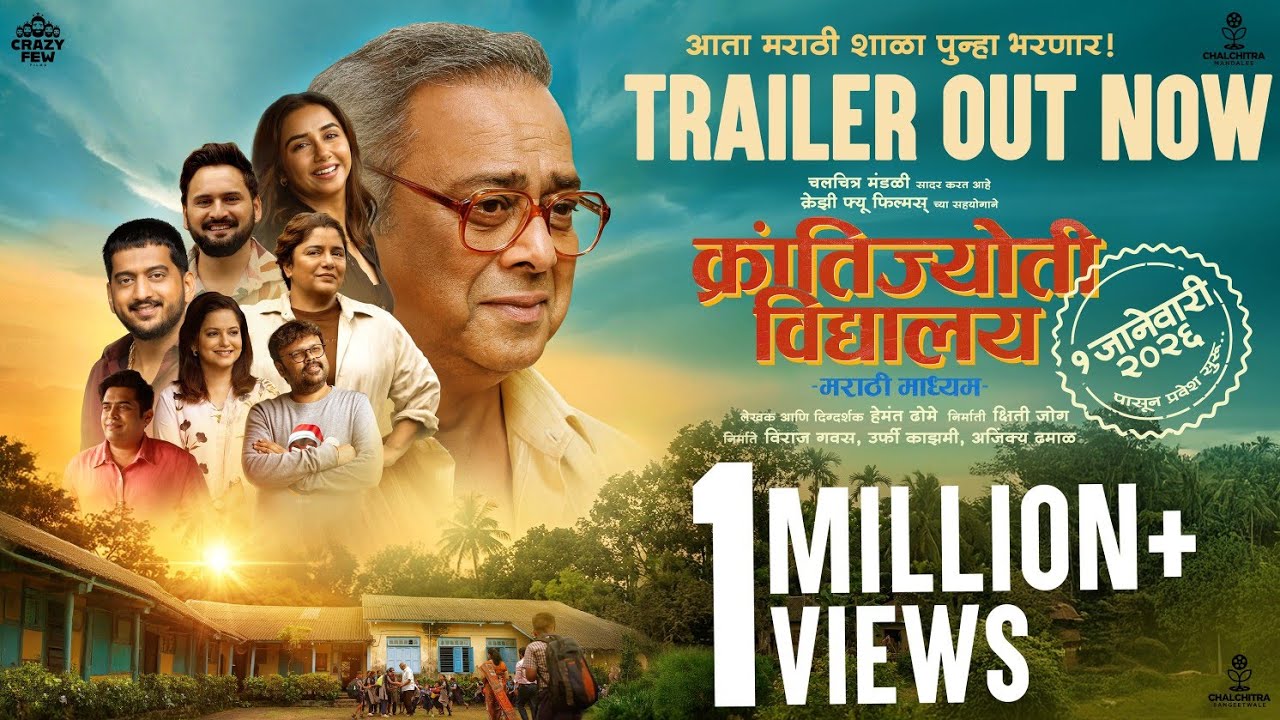
Krantijyoti Vidyalay Movie 2025 Movierulez Review Details
Krantijyoti Vidyalay Review – A Nostalgic Cry or a Timely Warning? The Real Analysis

As someone who has watched the very fabric of regional cinema evolve, I find myself asking: does this film offer a genuine elegy for a fading system, or is it merely a sentimental postcard?
The Core Conflict
🎬 Book Movie Tickets Online
Check showtimes, seat availability, and exclusive offers for the latest movies near you.

The film is set in a dilapidated Marathi-medium school on the precipice of permanent closure. Its deserted halls symbolize a larger cultural erosion. The plot follows a group of former students who return, confronting their own pasts and the institution’s bleak present, in a desperate bid to revive the alma mater that shaped them.
| Role | Name |
|---|---|
| Director & Writer | Hemant Dhome |
| Lead Debut | Prajakta Koli |
| Supporting Cast | Siddharth Chandekar |
| Supporting Cast | Sachin Khedekar |
| Supporting Cast | Amey Wagh |
| Supporting Cast | Kshitee Jog |
| Music | The Folk Aakhyan |
| Cinematography | Just Right Studioz Nx |
Who Is This Movie For?
This film speaks directly to the Marathi diaspora and urban Maharashtrians grappling with linguistic identity. It’s for anyone who feels a pang of loss seeing their mother-tongue institutions crumble.
While its heart is regional, its theme of cultural preservation against homogenizing forces has a universal chord.
However, viewers seeking high-stakes drama or complex plot twists may find the pacing deliberate. This is a film of emotional resonance, not narrative gymnastics.
Script Analysis: The Flow of Memory
Hemant Dhome’s script is structurally sound, mirroring the act of reminiscence. It flows between two timelines with a clear, nostalgic logic. The pacing in the present-day scenes is heavy with institutional decay, while the flashbacks burst with the vibrant, slightly idealized energy of youth.
The logic of the central conflict—alumni versus systemic indifference—is compelling. However, the script occasionally leans on familiar beats of the “save the institution” genre. The strength lies not in surprising us with *what* happens, but in making us feel *why* it matters so deeply.

Character Arcs: From Students to Stewards
The most compelling growth is collective. The returning alumni aren’t the same people who left. They’ve been shaped by a world that devalued their foundational education. Their arc is about reclaiming that pride.
Prajakta Koli’s character effectively embodies the generation caught between tradition and modernity. Sachin Khedekar, as a teacher, portrays an arc of dignified resilience, not dramatic change.
The characters serve the theme, which is both the film’s strength and its limitation—they are poignant symbols, but some lack deeply individualized complexities.
The Climax Impact: A Satisfying Echo
The climax wisely avoids a simplistic, fairy-tale victory. The satisfaction derives not from a miraculous bureaucratic reversal, but from the rekindled sense of community and purpose. It’s an emotional resolution more than a logistical one.
The ending feels earned because it prioritizes the internal victory of reclaimed identity over an unrealistically neat external solution. It leaves you with a melancholic yet hopeful echo, a fitting tone for the subject matter.
| What Worked | What Didn’t |
|---|---|
| Clear, thematic focus on a relevant social issue. | Plot structure can feel predictable in its broad strokes. |
| Effective use of parallel timelines for emotional contrast. | Some character motivations could use deeper excavation. |
| Pacing that allows the weight of the setting to sink in. | Minor subplots occasionally dilute the central narrative thrust. |
Writer’s Execution: Dialogue of the Heart
Dhome’s dialogue is the film’s backbone. It avoids grandiose monologues about language pride. Instead, it finds potency in simplicity—a teacher’s quiet disappointment, an alumnus’s embarrassed admission of distancing from Marathi, the playful banter of remembered school days.
The dialogue feels authentic to the milieu. It works because it sounds like conversations overheard in staff rooms and reunion gatherings, laced with unspoken history and subtle shame.

Miss vs Hit Factors
The hit factor is undeniably its sincerity and timeliness. It tackles a lived experience for millions with an uncynical heart. The casting of Prajakta Koli bridges digital-native youth with traditional cinema, a masterstroke for relevance.
The potential miss lies in its risk-averse narrative framework. By adhering closely to the emotional playbook of the genre, it sometimes misses opportunities to subvert expectations or introduce more biting social critique.
It chooses to be a warm embrace rather than a provocative challenge.
Technical Brilliance: Crafting Nostalgia
The cinematography is starkly effective. The present is all washed-out tones and empty, wide frames, while the past is bathed in a golden, dynamic glow. The editing seamlessly stitches these two feelings together.
The music by The Folk Aakhyan is not just background score; it’s a narrative device. Songs like “Shala Marathi” act as cultural anthems, while the reimagined “Swargat Akashganga” serves as a direct bridge to collective memory.
Sound design meticulously captures the haunting silence of an empty school versus the chaotic symphony of a functioning one.
| Aspect | Rating & Comment |
|---|---|
| Story Originality | 7/10 – Familiar theme, executed with fresh cultural specificity. |
| Visual Storytelling | 9/10 – The contrast between timelines is powerfully conveyed through lens and color. |
| Emotional Payoff | 8/10 – Earned and resonant, if not wholly unexpected. |
| Technical Harmony | 9/10 – Sound, score, and visuals work in perfect concert to build the film’s world. |
Frequently Asked Questions
Is the film based on a true story?
While not a direct biography, it is deeply inspired by director Hemant Dhome’s own experiences and the widespread phenomenon of declining Marathi-medium schools in Maharashtra. Its power lies in its composite truth.

Does the film offer solutions to the problem it presents?
Its solution is cultural and personal, not political. The film argues that preservation begins with valuing one’s linguistic heritage, suggesting that change starts with individual and community re-engagement.
How does Prajakta Koli fare in her Marathi film debut?
She delivers a sincere and relatable performance that anchors the film for a younger audience. She doesn’t overpower the ensemble but integrates into it, representing a key demographic in the language debate.
This analysis is based on the theatrical experience and cinematic merit.